
Popular Searches
Popular Searches

How Do You Choose the Right Agriculture Water Sprinkler System for Different Crops?
Experience the difference the right sprinkler system can make. Whether you're growing row vegetables, sprawling field crops, or orchard treasures, choosing the right agricultural sprinkler impacts everything—from water distribution and crop health to labor efficiency and cost savings.
If you’ve ever watched water falling unevenly across your field, too much in one patch and barely any in another, you already know how much the sprinkler system matters. Different crops don’t just grow differently; they drink differently too.
Whether you're planting vegetables in rows, managing an orchard, or working with field crops like wheat or maize, the sprinkler you choose plays a direct role in how evenly your crop grows, how much water you save, and how often you need to intervene.
Using the right Agriculture Water Sprinkler system ensures optimal water distribution, saves resources, and improves crop yields across all types of farms.
At Automat, we’ve spent decades in the field with farmers, helping them pick the right system not just for their crops, but for their land, water pressure, and even the weather they deal with.
Matching Sprinkler Systems to Crop Types
There is no such thing as a one-size-fits-all Agriculture Water Sprinkler solution. The right sprinkler system depends on what you grow, how your land is shaped, and how much water you’re working with.
-
Vegetables and Row Crops
Crops: Carrot, radish, tomato, onion, spinach, beans
Best suited systems: Solid-set sprinklers, medium-radius impact sprinklers
For short-statured crops planted in neat rows, you’ll want a reliable system that gives uniform coverage without drenching the leaves or pooling around the roots. Solid-set systems work well here, letting you water evenly and gently without shifting lines too often. Look for sprinklers with medium coverage radius (around 10–12 meters) and low to moderate pressure needs, especially if your plots are compact.
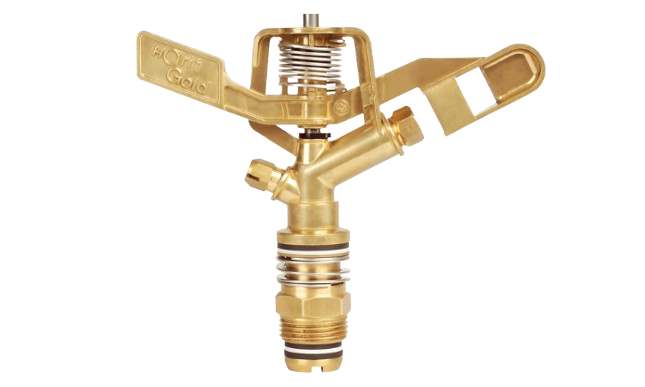
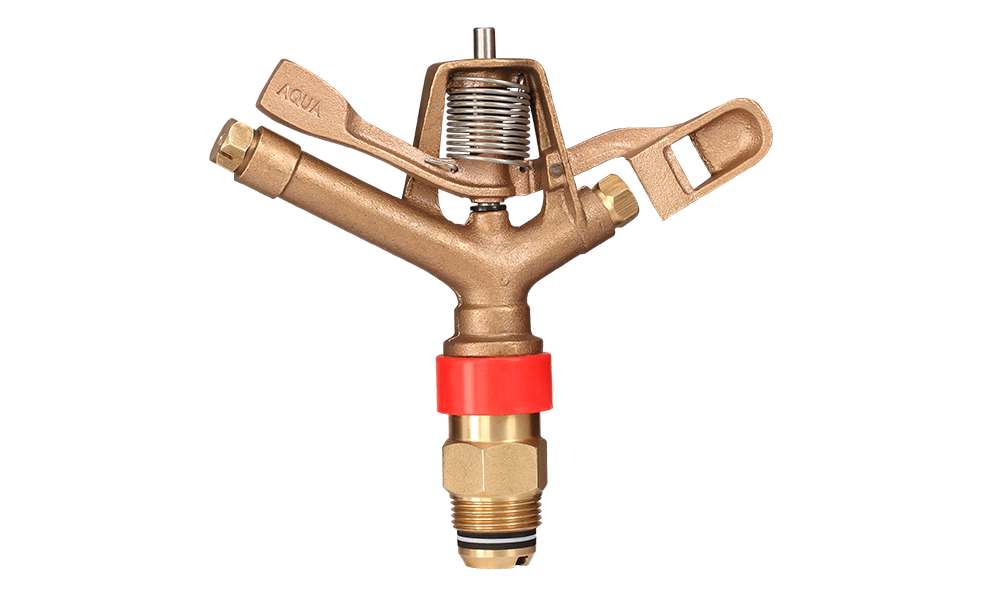
We often recommend brass impact models like our HT-22) a ¾” sprinkler for this purpose as it is tough, precise, and designed for repeated use in shifting field conditions.
-
Field Crops
Crops: Maize, bajra, wheat, groundnut, jowar, etc.
Best suited systems: Long-throw impact sprinklers, portable sprinkler sets
With larger fields, deeper watering is especially important during peak growth stages. That’s where high-radius, robust impact sprinklers come in. Look for sprinklers with throw distance of 13–15 meters and a good trajectory angle to handle breezy conditions.
Sprinklers like our HT-20G (Harit Gold) and Saaras 46 are designed just for this. They can handle fluctuating pressures, deliver uniform water distribution, and hold up well to constant field movement.
-
Orchards and Plantation Crops
Crops: Tea, coffee, watermelon, Apples, Citrus fruits & Berries
Best suited systems: Micro irrigation sprinkler, and Rain guns
Orchards come with unique challenges like tree spacing, canopy shadow, and the need for deep root watering without wetting trunks. Here, targeted systems make more sense. Micro sprinklers are ideal for slow, deep watering near the root zone. Our HT-206 PC is a go-to choice as you can fine-tune the spray angle and direction to match the layout of each tree line or plantation block.
Our High-range Rain guns HT- 40g and HT- 42g are used in coffee and tea plantations because they provide wide area coverage, uniform water distribution, and are effective in hilly terrain. They save time and labour, as well as help control humidity, dust, and protect crops from frost damage.
A Closer Look at Sprinkler Types
Knowing which Agriculture Water Sprinkler system fits your farm best starts with understanding what each type is built to do.
-
Impact Sprinklers
This is our go-to solution for broad coverage. We make two kinds:
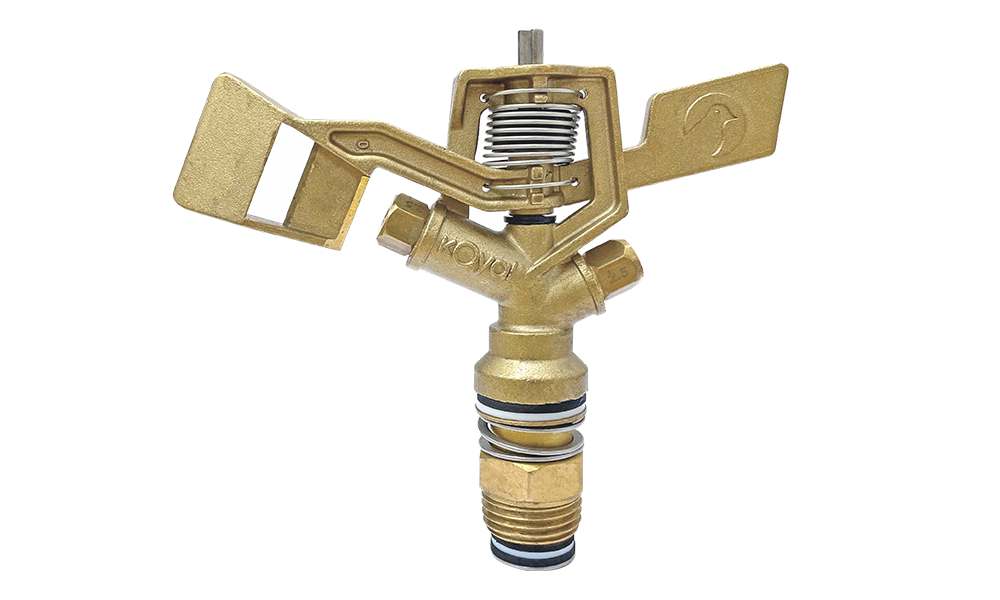
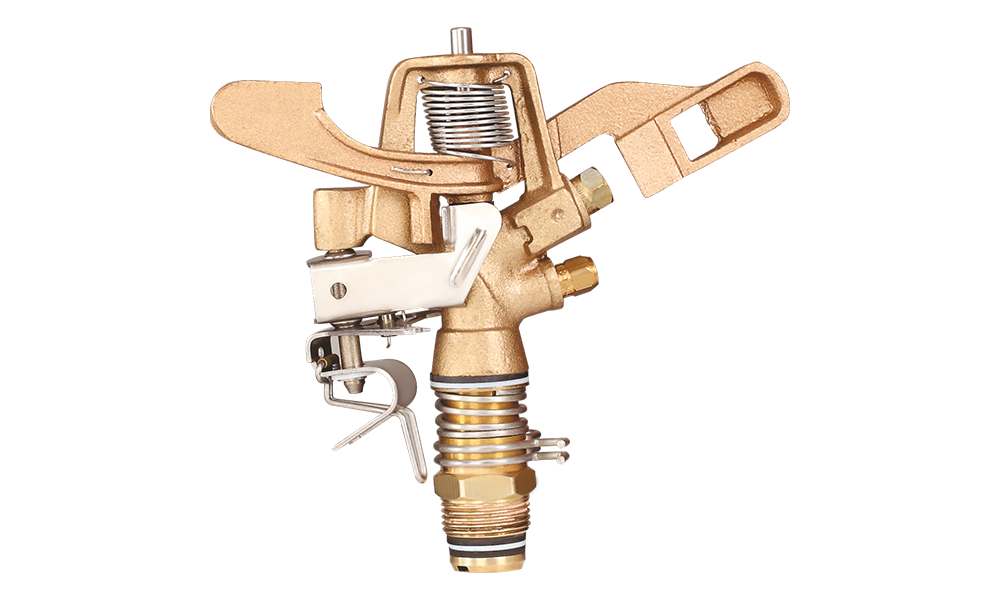
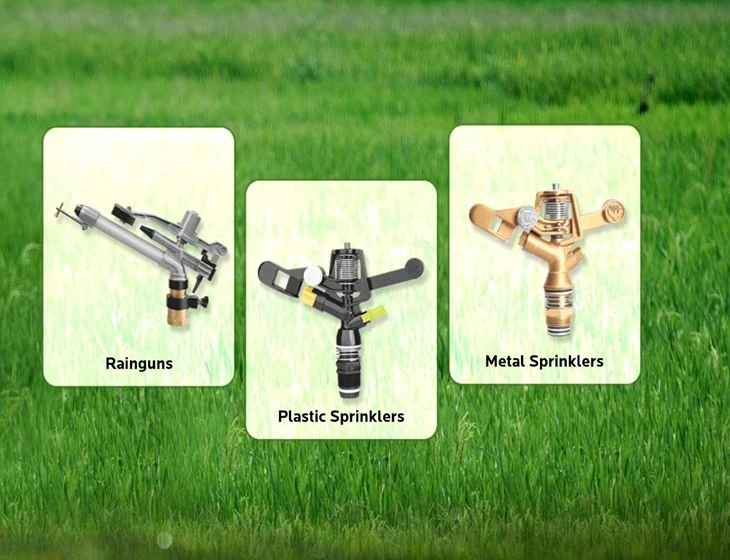
Metal Sprinklers: Made from durable materials like aluminium, brass, and bronze, metal sprinklers are long-lasting, ideal for fixed installations, ensure uniform irrigation, save time in fields, and are easily available under subsidy.
Plastic Sprinklers: Lightweight yet efficient when installed properly, plastic impact sprinklers are economical, durable, and easy to relocate—making them ideal for flexible irrigation across different field locations.
Our impact sprinkler system are built for solid-set irrigation, giving you consistent, reliable performance whether you are irrigating grains, pulses, or forage crops.
-
Micro Sprinklers
When you’re growing delicate crops or need gentler coverage, this is where our micro irrigation sprinkler range comes in. These are ideal for orchards, vineyards, polyhouses, and even nurseries — anywhere soft droplets and low pressure do the trick.
They’re easy to install and deliver water evenly, with hardly any runoff or wastage.
Before installing any agricultural water sprinkler system:
1. Know Your Water Source
First things first. Assess how much water is available and at what pressure. Whether you are setting up an impact sprinkler system or a micro irrigation sprinkler, the pressure and flow rate will directly affect coverage and performance.
2. Map Your Field
Sketching out your field helps you understand how many sprinklers you need, what capacity sprinklers and where they should be placed. Spacing is key, especially if you are installing a sprinkler system, where uneven watering can affect quality and yield.
3. Choose the Right Accessories
Valves, pipes, filters, and connectors — getting the right ones ensures long-term reliability. Always refer to a proper sprinkler installation guide to avoid mismatched components or leaks later.
4. Plan for Access and Movement
Are you going for a fixed (solid-set) layout or a mobile one? For crops that need frequent shifts, like seasonal vegetables, flexibility matters and for larger, more permanent plantations, a solid, semi-automated setup may be better.
A bit of prep now saves a lot of trouble later. Whether you are laying out a new irrigation system or upgrading an old one, these steps make your investment more effective.
Don’t Let These Mistakes Soak Your Effort
When choosing a sprinkler system, a wrong setup can cause more harm than help. Reading through sprinkler maintenance tips will also help your sprinkler live up to its shelf life. Here are some pitfalls to avoid.
1. Ignoring the Layout
Although it's the fastest way, do not skip a proper layout plan. Overlapping spray in some areas and dry patches in others is a common result of poor zoning.
2. Neglecting the Soil
Not all soils absorb water the same way. A sprinkler that works well in sandy soil may flood a field with clay.
3. Forgetting the Pressure
Water pressure changes across a field. Using a single setting for everything can lead to weak sprays in one part and pipe-busting pressure in another.
4. Skipping Proper Filtration
Sediment in your water source can clog nozzles or even ruin your valves. Installing the wrong filter (or worse, none) creates long-term problems.
5. Poor Sprinkler Head Placement
Sprinkler heads that are too close will waste water, and those that are too far apart will result in patchy fields and stunted growth.
The right choice of agricultural water sprinkler system delivers better yields, lower costs, and fewer field headaches. From the best irrigation for fruit crops to dependable coverage for vegetable plots, our systems are built to perform, all season long.
FAQs
What is the sprinkler system in agriculture?
It is a method of watering crops by spraying water through nozzles, simulating rainfall for even coverage across fields.
Which sprinkler system is best for leafy vegetables?
A micro irrigation sprinkler works best as it delivers gentle droplets that won’t damage delicate leaves.
Can I use the same sprinkler setup for all types of crops?
Not quite. Different crops have different water needs, so it’s best to match your agricultural sprinkler solution to the crop type and layout.
What factors should I consider before installing a sprinkler system?
Think about your water pressure, soil type, crop spacing, and whether you need a fixed or movable setup, or refer to a sprinkler installation guide to help you plan.
How much water does a typical sprinkler system use per hour?
It varies by model, but most systems use between 500 to 1,200 litres per hour per sprinkler, depending on nozzle size and pressure.
Are there affordable sprinkler systems for small-scale farmers?
Yes! Options like plastic impact sprinkler systems and micro sprinklers are both cost-effective and reliable for smaller farms.

Download Mobile App


Get in touch

Plot no. 18-19, Dilshad Garden, G.T. Road, New Delhi 110095.


