
Popular Searches
Popular Searches

Why Proper Filtration Systems Matter for Summer Vegetable Irrigation in Uttar Pradesh ?
Most of us have seen it happen at home. A tap or shower starts running slowly, and the first thought is that something inside the pipe must be clogged. Usually it turns out to be a bit of dirt or sediment blocking the flow.
Most of us have seen it happen at home. A tap or shower starts running slowly, and the first thought is that something inside the pipe must be clogged. Usually it turns out to be a bit of dirt or sediment blocking the flow.
The same thing can happen in irrigation systems. Water used for farming rarely comes perfectly clean. In many regions of Uttar Pradesh farming, irrigation water carries sand, silt, or organic particles that travel through pipes again and again during the summer vegetable season. Over time, these small impurities begin affecting how smoothly water moves across the field.
This is why properly designed filtration systems quietly become an important part of irrigation.
Water sources used across agriculture in Uttar Pradesh
Across agriculture in Uttar Pradesh, farms depend on different kinds of irrigation sources. Canal networks cover large areas, while ponds and borewells often supply additional water when needed.
Each of these sources brings water to the field, but none of them are completely free from impurities. Canal water often carries suspended silt. Pond water may include algae or decaying organic matter. Borewell water can bring up fine sand from underground layers.
When the same water keeps moving through irrigation pipes day after day, some of those particles start settling in different parts of the system. It may begin with small deposits inside pipes or outlets. Over time those deposits slowly affect how evenly water spreads across the field.
That is where well planned filtration systems begin protecting the irrigation network.
How particles affect irrigation system efficiency ?
Irrigation systems perform best when water reaches every section of the field in a balanced way. Once that balance changes, the difference quickly shows up in crop growth.
Tiny particles can interfere with this balance more than people expect. Sand grains may narrow the small openings in emitters. Organic residue can collect near outlets and reduce discharge.
As this builds up, water begins moving unevenly through the system, and that affects irrigation system efficiency across the field.
An irrigation water filter helps avoid this problem by trapping particles early, before they move further through the pipes and reach the emitters.
Borewell filtration system for underground water sources
Borewells supply irrigation water to many farms, especially during periods when canal water becomes less reliable. Although borewell water often looks clear, it frequently contains fine sand particles.
Fine sand travels easily with pumped water. If it isn’t filtered early, it can slowly collect inside pipes, valves, and emitters.
For this reason, many farms install a borewell filtration system at the beginning of the irrigation line. Hydrocyclone filters are commonly used for this task. Inside the chamber, water rotates quickly and heavier particles separate from the main flow so they can be flushed out.
Surface water and the need for primary filtration
Surface water sources bring their own issues. Canal or pond water often carries fine silt and bits of organic matter that move along with the flow.
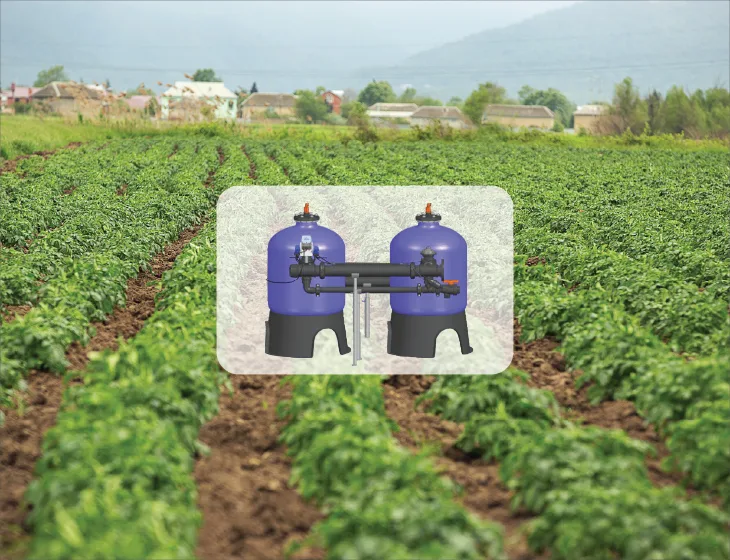
A sand media filter is usually placed early in the system to catch much of this material before it reaches the irrigation lines. By removing these particles at the start, the rest of the filtration systems can work more smoothly and pipes stay clearer during the season.
Secondary filtration for finer impurities
Even after the main filtration stage, a small amount of very fine material can still travel along with the water. Disc and screen filters deal with those. Disc filters trap debris between stacked discs, and screen filters catch it with a fine mesh. With both working together, these filtration systems help keep the irrigation lines cleaner before water reaches the field.
Summer vegetable irrigation and system reliability
Summer heat dries the soil faster than usual, so vegetable crops end up needing water more often. Gourds, cucumbers, and tomatoes especially depend on steady irrigation.
If a few emitters start clogging, water stops reaching every plant the same way. With good filtration in place, that kind of uneven watering is far less likely.
What farmers usually notice in practice
In many cases, the benefits of filtration appear gradually. Irrigation lines stay cleaner, emitters clog less often, and water flow remains steady through the season.
Farmers spend less time clearing blocked outlets or opening pipelines for cleaning. Irrigation runs continue as planned, and the field receives water more evenly.
At Automat, filtration equipment is designed with real farm conditions in mind. The idea is simple: help irrigation systems keep running smoothly through everyday field use.
Closing perspective
At first glance, irrigation simply looks like water moving from a source into the field. But the condition of that water quietly influences how well the entire system performs.
If sand, silt, or organic debris are stopped before they enter the lines, they never get the chance to clog pipes or outlets. Cleaner water usually means the irrigation system keeps working smoothly for longer.
That’s the idea behind how Automat looks at filtration, building systems that help farmers keep irrigation running without constant troubleshooting.
FAQs
What is the role of irrigation water filters in vegetable farming?
They keep sand, silt, and other debris out of the irrigation lines. When the water is cleaner, emitters are far less likely to clog.
Which irrigation water filter is best for borewell water?
Borewell water often carries fine sand, so farmers usually install filters that remove sand early in the line. Hydrocyclone filters are commonly used for this.
Can clogged filters damage drip lines in Uttar Pradesh?
They can create problems. If filters stop catching debris, those particles may reach the drip lines and block the emitters.
How do farmers maintain irrigation filters?
Most farmers simply keep an eye on pressure and flush or clean the filters from time to time. A quick check now and then usually keeps things working well.
Is filtration necessary for all vegetable crops in Uttar Pradesh?
Generally yes. Since vegetable fields are watered often, filtration helps keep the irrigation system running evenly across the crop.

Download Mobile App


Get in touch

Plot no. 18-19, Dilshad Garden, G.T. Road, New Delhi 110095.


