
Popular Searches
Popular Searches

How Flow Control Valves Help Vegetable Crops in Indian Conditions ?
Indian vegetable irrigation rarely runs under constant pressure. Pumps cycle, filters backwash, and multiple plots often share the same supply.
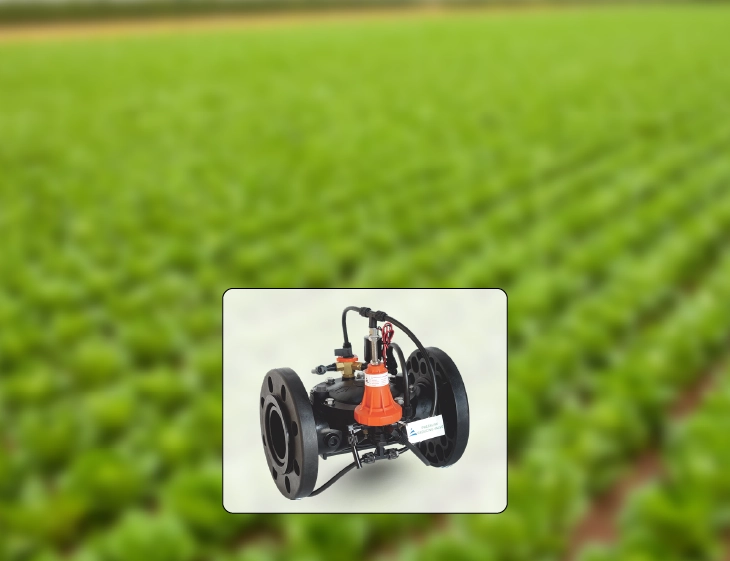
Indian vegetable irrigation rarely runs under constant pressure. Pumps cycle, filters backwash, and multiple plots often share the same supply. Under these conditions, controlling how water moves becomes as important as deciding when to irrigate. Flow control valves address this exact challenge by managing movement inside the system, not just at the outlet.
Vegetable crops respond quickly to changes in water availability. A short dip in pressure or an uneven discharge across rows can show up as patchy growth within days. This is especially true in systems where irrigation is frequent and closely tied to crop stage. When water delivery stays predictable, crop management becomes simpler. When it does not, problems tend to stack up quietly.
Pressure variation and everyday vegetable farming
Most vegetable farms in India operate with shared infrastructure. One pump may serve multiple plots. Filtration systems clean water at intervals. Power supply may fluctuate during irrigation windows. All of this affects pressure inside the pipeline.
Without regulation, water takes the easiest path. Areas closer to the pump receive more flow, while distant rows get less. Over time, this imbalance affects root development, nutrient uptake, and overall crop uniformity. Vegetable crop water control depends on keeping these variations within a usable range rather than trying to eliminate them entirely.
This is where valves designed for hydraulic control start playing a meaningful role.
Understanding flow control valve working in simple terms
When pressure goes up or down, the valve adjusts quietly in the background, helping water flow stay smooth through the line.
Because it works automatically, irrigation can run regularly without constant checking. The result is steadier flow and less stress on sprinklers and pipelines.
Flow control valve irrigation in vegetable layouts
Flow control valve irrigation is especially useful in fields with mixed vegetables or staggered planting schedules. Different sections may need different run times, yet they often draw water from the same source.
When one zone switches off, pressure rises in the rest of the line. If nothing checks it, some areas start getting extra water. A valve placed at the right point smooths that change, keeping the system steady instead of letting it swing.
Managing water movement instead of chasing schedules
Many irrigation issues don’t come from bad timing. They come from water not moving evenly through the system. When some rows stay dry, the usual reaction is to run another cycle. That adds water, but it doesn’t really solve the underlying problem.
A flow control valve water setup helps by smoothing out how water travels through the lines. When flow stays steady, sprinklers and emitters behave more like they’re meant to. Over time, the field needs fewer touch-up irrigations.
The change isn’t sudden or flashy. It shows up quietly, with fewer dry patches and soil moisture that stays more even from one end of the field to the other.
Flow control valve for Vegetable crop consistency
Vegetable crops tend to have shallow and active root zones. They respond quickly to both excess and shortage of water. A flow control valve for Vegetable fields supports consistency by smoothing out delivery differences that would otherwise reach the crop directly.
This becomes important during critical growth stages such as flowering, fruit set, and early harvest periods. At these stages, uneven water availability can affect size, quality, and shelf life.
The valve does not decide how much water the crop gets. It helps ensure that whatever amount is supplied reaches all sections evenly.
Role of irrigation automation valves in modern farms
As farms get larger, managing irrigation by hand becomes impractical. Automation is usually brought in to handle when different zones start and stop. These irrigation automation valves take care of that switching without needing constant attention.
When this automation works alongside hydraulic flow control, the system stays calmer. Valves decide the schedule, and flow control prevents pressure spikes. That balance helps irrigation run smoothly, without making the system harder to manage.
System durability and reduced stress
Pressure fluctuations do more than affect crops. They also shorten the life of system components. Pipes expand and contract. Joints loosen. Filters face uneven loading during backwash cycles.
Flow control valves reduce this mechanical stress by preventing sudden surges. Over a season, this leads to fewer leaks, fewer repairs, and less downtime. For vegetable growers who depend on tight irrigation windows, this reliability matters.
Practical placement within vegetable irrigation systems
Valves are often installed at points where pressure changes are most likely. This includes near pump outlets, before filtration units, or at the head of distribution zones.
Placement depends on system layout, not crop type. However, vegetable systems benefit more because of their frequent operation and higher sensitivity to variation. Once installed, the valve works quietly in the background without requiring daily attention.
Design approach shaped by field use
At Automat, we approach irrigation design by looking at how systems behave after months of real operation. Vegetable fields rarely match ideal conditions shown in diagrams. Dust, long run hours, and shifting demands all play a role.
Flow control valves are designed to work within this reality. Their role is not to optimise on paper, but to keep systems stable when conditions change.
Closing perspective
Vegetable irrigation in Indian conditions demands flexibility without instability. Pumps will cycle. Pressure will shift. Zones will change. What matters is how smoothly the system responds.
A flow control valve helps by managing movement rather than forcing rigid control. When water travels evenly through the system, crops receive what they need without constant correction. This steady, practical approach continues to guide how we think about irrigation system design at Automat.
FAQs
Why are flow control valves important?
They slow things down when flow changes, so water doesn’t surge or dip and the line stays more balanced.
Can valves improve crop yield?
They can help. When water reaches plants more uniformly, crops grow with fewer stress patches.
Are flow control valves suitable for all crops?
Yes, but they matter most in crops that need frequent irrigation or run on shared lines.
Do valves reduce water wastage?
They cut down the extra watering that usually happens when pressure goes out of balance.
How often should valves be checked?
Once before the season starts, and then during regular system checks, is usually enough.

Download Mobile App


Get in touch

Plot no. 18-19, Dilshad Garden, G.T. Road, New Delhi 110095.


