
Popular Searches
Popular Searches

How Irrigation Water Filters Prevent Drip System Clogging ?
Drip irrigation has changed the way Indian farmers manage water, especially in states where canal supply is unpredictable and groundwater is loaded with silt, sand, and organic debris.
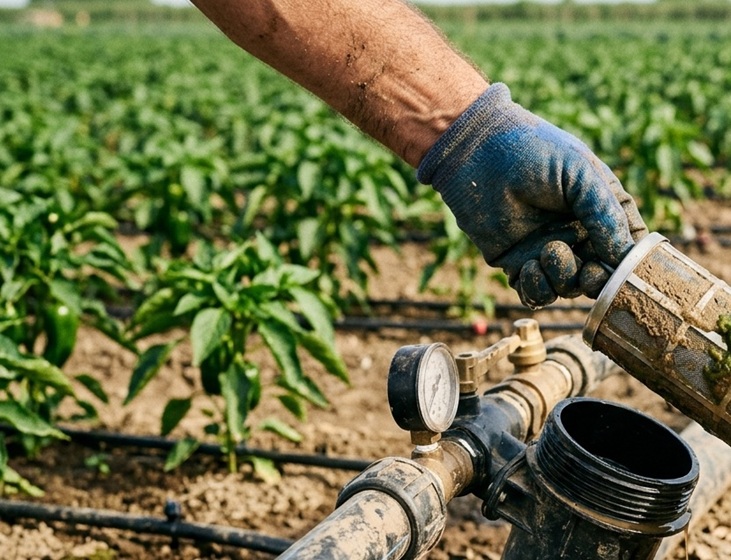
Drip irrigation has changed the way Indian farmers manage water, especially in states where canal supply is unpredictable and groundwater is loaded with silt, sand, and organic debris. But a drip system is only as good as the water going into it. Emitters have openings as small as 0.3–1 mm, and it takes very little sediment to choke them. This is where a properly selected irrigation water filter stops being optional and becomes the single biggest factor in whether a drip system lasts three seasons or ten.
This article walks through why clogging happens, how filtration -particularly hydrocyclone filter technology -solves it, and how to pick the right setup for canal, borewell, or open-well water common across Indian farms.
Why Drip Systems Clog in the First Place ?
Clogging in drip irrigation comes from three sources:
1. Physical Clogging – sand, silt, and clay particles suspended in water settle inside laterals and block emitter passages.
2. Chemical Clogging – If the water contains calcium or iron, small deposits can build up inside the pipes and emitters. Given enough time, those deposits become scale.
3. Biological Clogging – algae, bacterial slime, and organic matter build up, particularly in water drawn from open ponds or canals.
Physical clogging is the most common issue on Indian farms because a large share of irrigation water comes from canals or shallow wells carrying fine sediment. Without an irrigation water filter installed before the main line, this sediment travels straight into the drip network and settles wherever flow slows down -usually at the emitter, the narrowest point in the system.
The Role of a Hydrocyclone Filter
A hydrocyclone filter is typically the first stage of filtration for water drawn from borewells, tube wells, or any source carrying sand. It works on a simple mechanical principle rather than a screen or media bed: water enters the filter tangentially and is forced into a spinning motion inside a conical chamber. Centrifugal force pushes heavier sand and grit particles to the outer wall, where they spiral down and collect in a collection chamber at the base, while the cleaner water exits from the top.
Because a hydrocyclone filter removes sand and heavier particulates before the water reaches downstream filters, it does two things for a farm's filtration setup:
- Protects the pump – less sand passing through means less wear on impellers and seals.
- Extends the life of secondary filters – a disc or screen filter downstream lasts far longer when it isn't handling the full sediment load on its own.
For borewell-fed drip systems in sandy soil regions -parts of Rajasthan and western Gujarat, for instance -a hydrocyclone stage ahead of the main filtration unit is one of the most cost-effective upgrades a farmer can make, since it prevents the abrasive wear that shortens pump and emitter life.
Matching the Filter to the Water Source
Not every farm needs the same filtration combination. The right irrigation water filter setup depends heavily on where the water is coming from:
- Borewell/tube well water (sandy): A hydrocyclone filter as the primary stage, followed by a disc filter for finer particles.
- Canal water (silty, organic load): Media (sand) filters or a combination of media and screen/disc filters, since canal water carries more organic matter and algae than borewell water.
- Open well/pond water: Media filtration is generally required first, as this source carries the highest biological and organic load.
Choosing filtration based on the actual water source, rather than a generic setup, is the difference between a system that runs a full season without a service call and one that needs the network flushed every few weeks.
Filter Mesh Size and Cleaning Frequency
Two practical questions come up constantly from farmers and dealers on the ground, and both affect how well an irrigation water filter performs over the season.
Mesh size determines how fine the filtration is. As a general rule, the filter's mesh rating should be finer than the emitter's flow path -commonly 120–150 mesh for standard drip emitters, going finer for emitters with very narrow flow paths. Canal water with higher sediment load often needs a coarser pre-filter stage (sand/media) ahead of the fine mesh screen or disc filter, rather than relying on mesh alone.
Cleaning frequency depends on water quality and how hard the system runs. Sandy borewell water needs the hydrocyclone's collection chamber flushed regularly -daily to a few times a week in high-sediment areas -while the secondary disc or screen filter should be backwashed on a schedule tied to the pressure differential across the filter (a pressure gauge before and after the filter is the simplest way to know when it needs cleaning, rather than waiting for a fixed number of days). Water sitting in exposed canals or ponds also encourages faster algae growth, particularly in warmer months, which shortens the interval between cleanings.
FAQ's
How often should drip filters be cleaned in Rajasthan?
Rajasthan's groundwater is often sandier, so the hydrocyclone filter's sediment chamber may need flushing several times a week during peak irrigation. The downstream disc filter should be backwashed whenever the pressure gauge shows a noticeable drop across the filter -this is a more reliable trigger than a fixed calendar schedule, since sediment load varies through the season.
What mesh size filter suits canal water in Maharashtra?
Canal water in Maharashtra generally needs a coarser pre-filtration stage (sand media) to handle silt and organic matter before it reaches a finer screen or disc filter rated around 120–150 mesh, matched to the specific emitter's flow path.
Do sand media filters prevent clogging in Gujarat?
Yes -sand media filters are effective for Gujarat's open well and canal-fed farms, where organic content and algae are common. For borewell water in the sandier belts of the state, pairing a hydrocyclone filter with the media filter gives more complete protection against both grit and organic fouling.
Do I need a filter for my drip irrigation system?
Yes. Drip emitters have very narrow flow paths, and even water that looks clean carries enough fine sediment to cause clogging over a season. An irrigation water filter -sized to the water source, whether borewell, canal, or open well -is a basic requirement for any drip system, not an optional add-on.
Choosing the Right System
Filtration isn't a one-size-fits-all decision -it depends on the water source, the crop, the emitter type, and the scale of the farm. Automat's filtration range, including hydrocyclone and disc filter combinations built for Indian field conditions, is designed to match these variables rather than force a single setup across every farm.

Download Mobile App


Get in touch

Plot no. 18-19, Dilshad Garden, G.T. Road, New Delhi 110095.


