
Popular Searches
Popular Searches
Designing Raingun Irrigation Systems for Sugarcane, Maize and Peas
Designing a raingun irrigation system is not as simple as selecting equipment based on throw distance or discharge capacity. Distribution of water in a field is determined by operating pressure, size of sprinkler nozzles, spacing and application rate of sprinklers.
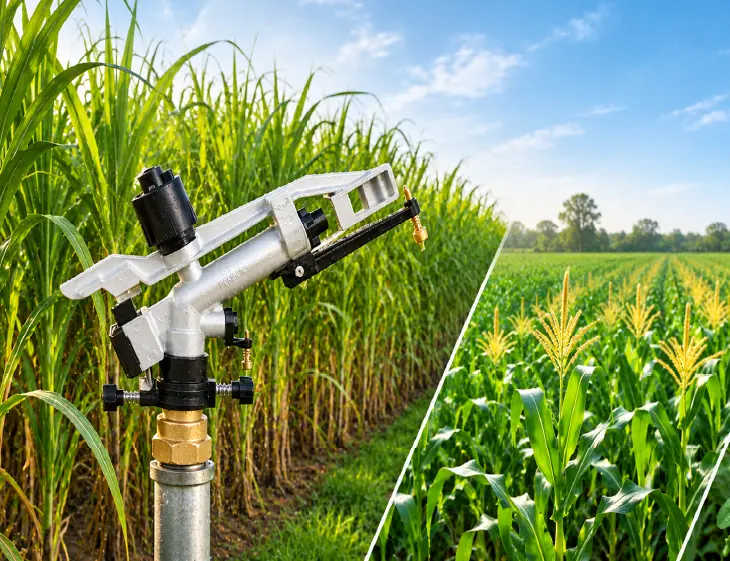
Designing a raingun irrigation system is not as simple as selecting equipment based on throw distance or discharge capacity. Distribution of water in a field is determined by operating pressure, size of sprinkler nozzles, spacing and application rate of sprinklers. In particular, water requirements and field conditions when irrigating sugarcane, corn, and peas with variable growth characteristics. With attention to water requirements of their crop, soil and water supply characteristics, and foreseeable operating situations, farmers can design a system that contains an appropriate amount of area and applies necessary water.
A Large Throw Is Only Part of the Picture
A rain gun can distribute water over a considerable distance, which makes it useful for irrigating larger agricultural areas. But a long throw does not automatically mean the whole field receives water evenly.
Sprinklers should also be properly placed. If they are too far apart, some areas will not receive as much water. If the pump cannot provide the pressure required by the selected equipment, the actual distribution may differ from what the design anticipates.
When planning a rain gun irrigation system, start with the field dimensions, available water supply and crop layout. These details help determine where the equipment should be positioned and which operating range is appropriate.
What Pressure and Nozzle Size Tell You
The technical specifications give a useful starting point. The product reference lists operating pressures of approximately 2.0 to 7.5 kg/cm², flow rates of 3 to 30 litres per second, nozzle diameters of 10 to 30 mm and wetting radii of around 27 to 60 metres. These are general ranges, and the actual performance depends on the model and operating conditions.
Pressure, nozzle size and discharge are connected. A nozzle should be selected according to the required application and the equipment's specifications, not simply because a larger opening delivers more water. The pump and pipework must also be suitable for the intended flow and pressure.
Wind can also affect distribution pattern. A sprinkler's rated throw should not be treated as a guarantee that water will land uniformly across the field in every condition.
Sugarcane: Plan for the Growing Crop
Sugarcane becomes taller and denser as it develops. Moving through a mature field can be difficult, so the location and portability of irrigation equipment deserve attention from the beginning.
A rain gun for sugarcane can help cover a substantial area from a strategically chosen position. Its suitability depends on the field layout, water supply, operating pressure and spacing between sprinklers.
Planning the system before the crop becomes difficult to access can make equipment placement more practical. Where a portable arrangement is appropriate, moving the equipment between positions may help cover different sections of the field.
The objective is not simply to send water as far as possible. To use it in the area that you want it to be in, bearing in mind the part of the crop's growth, together with the abilities of the irrigation system.
Maize and Peas Need Their Own Considerations
Maize and peas should not automatically be irrigated using identical settings. Their growth habits differ, and the arrangement that suits one crop may not be appropriate for the other.
When growing maize, the distribution pattern and sprinkler placement should be taken into account. Peas: Wary of rates, whether the setup is suitable for the slope of the crop
Replaceable nozzles can allow availability to various campaigns and soils depending on the type of device nozzle. Some models also have an adjustable jet breaker, allowing changes to droplet size and impact.
A plastic rain gun may be worth considering when comparing equipment options, but material alone does not establish performance. The nozzle options, operating specifications and suitability for the intended application should guide the decision.
Choosing Equipment for the Whole Installation
The sprinkler is only one part of the setup. Mainline pipes, sub-main pipes, tripod stands, couplings and other fittings all contribute to how the system is installed and operated.
The product reference identifies PVC, HDPE and aluminium as possible mainline pipe materials. The appropriate choice depends on the design and operating requirements. Connections must also be compatible with the selected pipework and sprinkler.
A plastic rain gun sprinkler should be evaluated against its specified operating pressure, discharge, throw and available nozzle options. It is not the design and not the material of the product, but here are the things you should look for in such a product before you purchase it:
At AUTOMAT, we focus on irrigation solutions that support efficient water use and practical field operation. Looking at the complete installation helps ensure that the equipment selected suits the intended application.
Spacing Makes a Difference
The distance between rain guns matters just as much as the throw of each sprinkler. If they are placed too far apart, some parts of the field may receive less water than others. The layout needs to allow enough overlap between neighbouring sprinklers.
There are two common ways to arrange rain guns: square and triangular. In a square layout, the spacing between rain guns on the same lateral is the same as the spacing between laterals. Both distances are calculated as (1.41 \times G). - Triangular rain guns and three laterals triangular.
In these formulas, (G) is the rain gun's jet length or throw. (D) refers to the spacing between rain guns along a lateral, and (D1) refers to the distance between laterals.
These figures are a starting point, not a fixed rule for every field. Wind, operating pressure and the selected rain gun can all affect how evenly water reaches the ground, so the final layout should be checked against the manufacturer's recommendations.
Installation and Safe Operation
For anyone learning how to use rain gun equipment, safe installation is the first step. Secure the sprinkler properly to its tripod or use the specified quick-coupling arrangement. Check that the nozzle matches the designed rating, and use the recommended tools when replacing nozzles or opening components.
Keep a safe distance from a rotating sprinkler, particularly an impact-type model. The installation guidance recommends staying approximately one metre away during rotation. Always check manufacturer paperwork before ranging, handling, or modifying the hardware.
Wind conditions also need attention. The strong winds will make it difficult to spread the water and to get the coverage you desire.If your sprinkler won't turn off properly, try to fic it on your own, and then call a technician.
Handle a plastic rain gun carefully during installation and relocation, particularly when using quick couplings. Avoid dropping the equipment or forcing connections, as plastic components may be damaged.
Design Around the Conditions on Your Farm
Before finalising the installation, check the field area, available pressure, expected flow, nozzle choice and sprinkler spacing. Consider how the crop will grow and whether the equipment can be operated safely and conveniently throughout the season.
A plastic rain gun should be chosen according to these practical requirements, rather than throw distance or price alone. The same principle applies when deciding where to position the sprinklers and how frequently to move portable equipment.
At Automat, our focus is on irrigation planning that takes account of the field, the equipment and the available water supply. For sugarcane, maize and peas, a carefully planned system helps farmers work towards appropriate coverage and more considered water use.
FAQs
What pressure is required for a rain gun to work efficiently?
Rain guns typically operate at pressures between 2.0 and 7.5 kg/cm². The right pressure depends on the selected model, nozzle size and required throw.
How much area can one rain gun cover?
A rain gun can have a wetting radius of around 27 to 60 metres, depending on the model and operating conditions. The actual area irrigated evenly depends on sprinkler spacing and overlap.
Which crops are suitable for rain gun irrigation?
Rain guns are used for crops such as sugarcane, maize, wheat, pulses, soybean and fodder. Sugars are appropriate for the water availability, soil, and crop requirements.
Is rain gun irrigation good for sugarcane?
Rain guns can be used for irrigation of a large area of sugarcane. Spacing components, and pressure will help spread the water evenly on the field.
How do I select the right nozzle size for a rain gun?
Select a nozzle based on the required flow rate, working pressure, desired throw and soil infiltration rate. The nozzle should be compatible with the rain gun's operating characteristics.

Download Mobile App


Get in touch

Plot no. 18-19, Dilshad Garden, G.T. Road, New Delhi 110095.


