
Popular Searches
Popular Searches

How to Choose the Right Sprinkler Irrigation Method for Bajra Land Preparation in Rajasthan
Bajra is one of the few crops that truly understands Rajasthan. It survives heat, wind, and uncertain rain. But before the first seed goes into the soil, the field has to be prepared carefully.
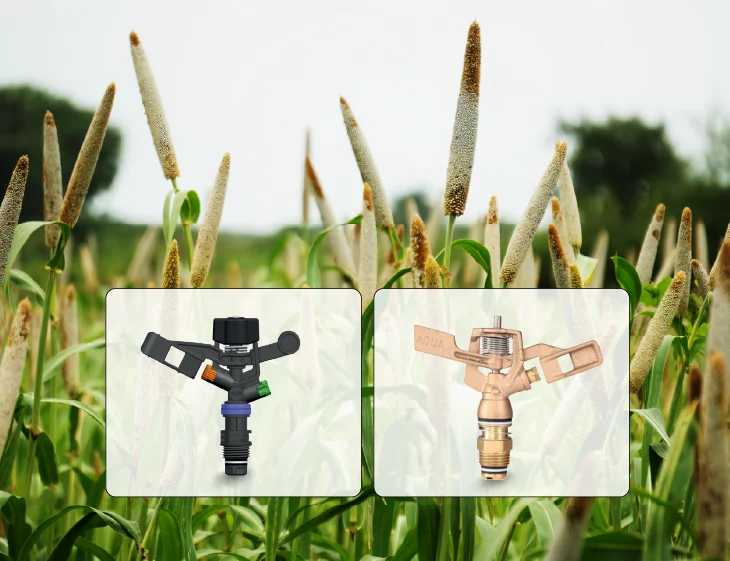
Bajra is one of the few crops that truly understands Rajasthan. It survives heat, wind, and uncertain rain. But before the first seed goes into the soil, the field has to be prepared carefully. Watering at this stage is not about growth yet. It is about setting the ground right.
Land preparation irrigation needs to moisten the top soil evenly so that ploughing, leveling, and later sowing can happen smoothly. Too much water causes crusting. Too little leaves dry pockets that affect germination. Choosing the right sprinkler irrigation method for Bajra Land becomes important right here, before the crop even begins.
Understanding Bajra’s Role in Rajasthan Agriculture
Rajasthan is widely known as the largest bajra producing state in India. That scale matters. Large areas are cultivated, often in semi-arid belts where rainfall remains unpredictable.
Because bajra plantation usually depends on monsoon timing, pre-sowing irrigation often fills the gap when early rains are delayed. Uniform soil moisture before sowing helps achieve better germination once seeds are placed.
If some patches get more water and others stay dry, the crop never comes up evenly. That’s why the sprinkler irrigation method for Bajra Land should be picked after looking at the soil, the water you actually have, and the pressure on site, not just because it’s what’s always been used.
Bajra Pre-Sowing Irrigation
Pre-sowing irrigation for bajra is usually done just to settle the soil before ploughing or after leveling. It is not about drenching the field, just bringing enough moisture into the top layer so the soil works properly.
Flooding at this stage often leads to runoff, especially on sandy or uneven land. Sprinklers, on the other hand, spread water more gently and evenly. What really matters while selecting a sprinkler irrigation method for Bajra Land here is steady, even wetting, not pushing out more water than the soil can handle.
Sandy Soil Irrigation Rajasthan
Sandy soil irrigation Rajasthan presents its own challenge. Sandy soils absorb water quickly but also lose it faster. If too much water is applied in one go, it percolates beyond the root zone and becomes unavailable.
Sprinklers with moderate precipitation rates work better here. For example, models operating between 1.0 and 4.0 kg/cm² can provide steady rotation without forcing excessive application.
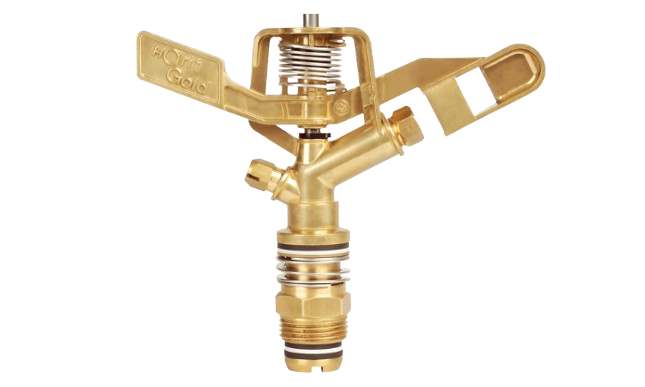
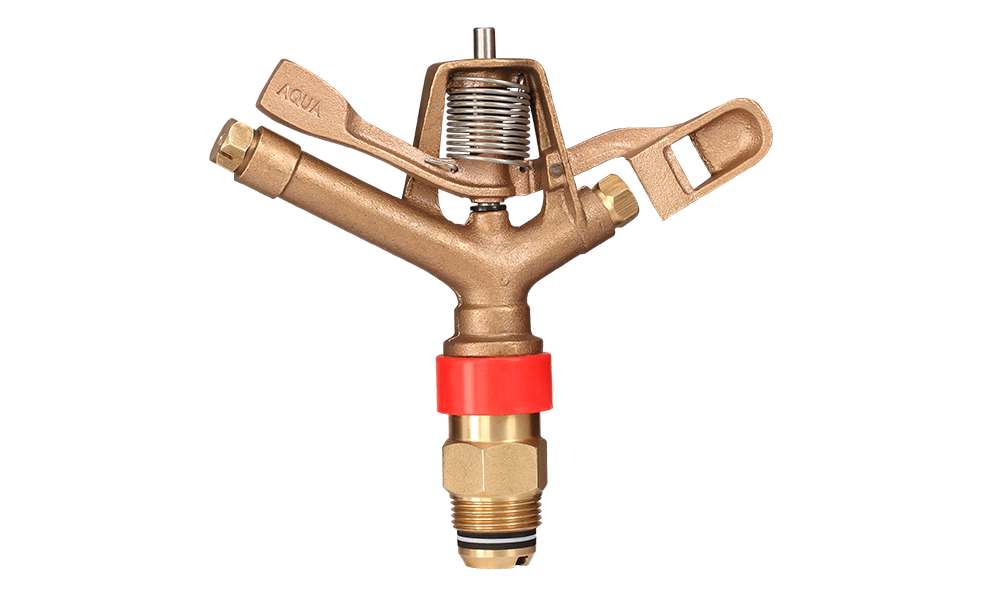
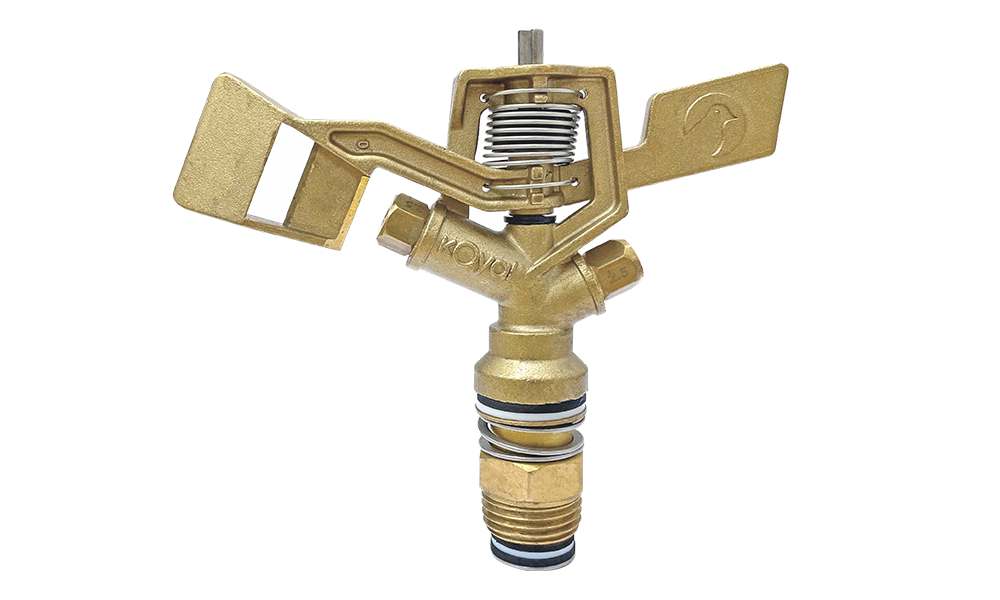
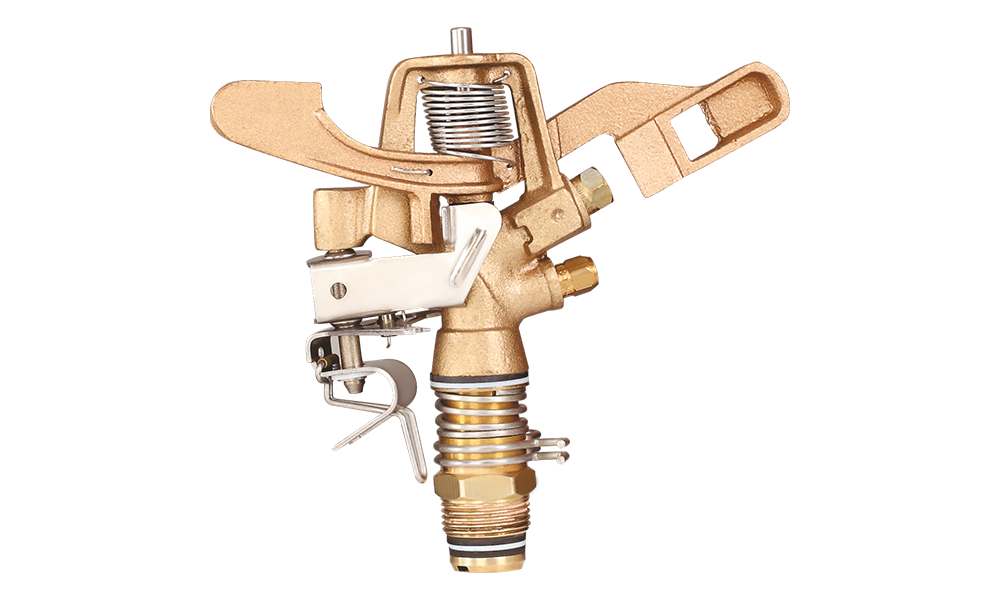
Plastic impact models like HT-46 (Saaras) or HT-30P are often used because they maintain uniform coverage and can be spaced up to recommended distances without heavy overlap.
The sprinkler irrigation method for Bajra Land should therefore match the soil’s infiltration rate. Slower, even application reduces both runoff and deep percolation losses.
Sources of Irrigation in Rajasthan
Sources of irrigation in Rajasthan vary widely. Some farms depend on borewells, others on canal supply, and many operate under limited or fluctuating power conditions.
This affects pressure stability. When pump output changes, sprinklers that demand very high operating pressure may struggle to maintain rotation. Impact sprinklers designed to operate efficiently even at low water pressure levels become more suitable under such conditions.
Every Automat impact sprinkler is designed to provide highly uniform coverage and operate efficiently at lower pressure ranges. That becomes useful in fields where supply is not always consistent.
You can’t pick a sprinkler blindly. First see what pressure your pump actually gives in the field and how much water it can really push through the line. That usually tells you more than any brochure ever will.
Land Preparation Irrigation and Uniform Coverage
Land preparation irrigation should avoid waterlogging while ensuring even surface moisture. Uneven watering creates clods in some areas and dry patches in others, affecting seed placement and depth control.
Plastic impact sprinklers such as HT-22 XU (SAARAS HT-46) operate at pressures as low as 0.7 bar. Their nozzle design improves distribution uniformity, which supports even soil wetting before sowing.
For larger plots, models like HT-30P offer recommended spacing up to 18 metres, allowing wider coverage with fewer units. This reduces installation complexity during preparation.
The sprinkler irrigation method for Bajra Land must balance coverage, spacing, and application rate.
Matching Sprinkler Type to Field Size
On smaller fields, compact sprinklers spaced closer usually do the job. In wider, open land, farmers prefer sprinklers that reach farther so the ground doesn’t end up patchy between placements.
Heavier metal models like HT-20G or HT-25 are often fixed in setups that don’t move much and where wind is common. Plastic ones are easier to lift and shift, which makes them practical when lines are moved during field work.
The decision should consider:
- Soil type
- Pressure availability
- Field size
- Frequency of shifting pipelines
A sprinkler irrigation method for Bajra Land that fits these realities will perform more consistently than one chosen purely on brand familiarity.
Bajra Plantation and Early Moisture Conditions
Once bajra plantation begins, the crop relies on early soil moisture for germination. Uneven pre-sowing irrigation results in staggered emergence.
Uniform sprinkler coverage during land preparation helps create consistent seedbed moisture. This reduces the risk of dry pockets that delay sprouting.
Good preparation also reduces the need for corrective irrigation immediately after sowing, which is particularly helpful in areas where water is limited.
Energy and Water Efficiency
Power use depends a lot on how the irrigation is set up. If a sprinkler needs high pressure all the time, the pump has to work harder and that shows up in the electricity bill.
When sprinklers run comfortably within normal pressure, the pump doesn’t struggle and the whole setup feels steadier. That’s how we at Automat look at it too. Keep the water spread even, don’t overburden the system, and let the field prep stay simple and dependable.
Practical Selection Checklist
Before settling on a sprinkler irrigation method for Bajra Land, it helps to pause and look at what’s actually happening on the field.
Is the soil mostly sandy, or does it hold moisture a little longer? How much pressure really reaches the last riser when the pump is running? Are the lines going to stay fixed for the season, or will they be shifted often? And how big is the area that needs to be prepared in one go?
Water availability matters too. If supply comes and goes, the sprinkler choice should reflect that.
Thinking through these basics usually makes the decision clearer. It prevents picking something too heavy for the setup or too demanding for the pressure the farm can realistically maintain.
Conclusion
Bajra can manage Rajasthan’s weather, but the real work begins before the seed even goes in. If the field is watered properly at preparation stage, germination usually turns out more even.
When the sprinkler irrigation method for Bajra Land suits the soil and the kind of pressure actually available on the farm, field prep simply goes more smoothly. And that steady start often carries through the rest of the season.

Download Mobile App


Get in touch

Plot no. 18-19, Dilshad Garden, G.T. Road, New Delhi 110095.


