
Popular Searches
Popular Searches

What is a uPVC Compact Ball Valve and How is It Used?
In plumbing systems, a valve may perform a simple function, but the space available for installing it is not always generous. Compact ball valves are for applications where shut-off control is needed without taking up as much physical space.
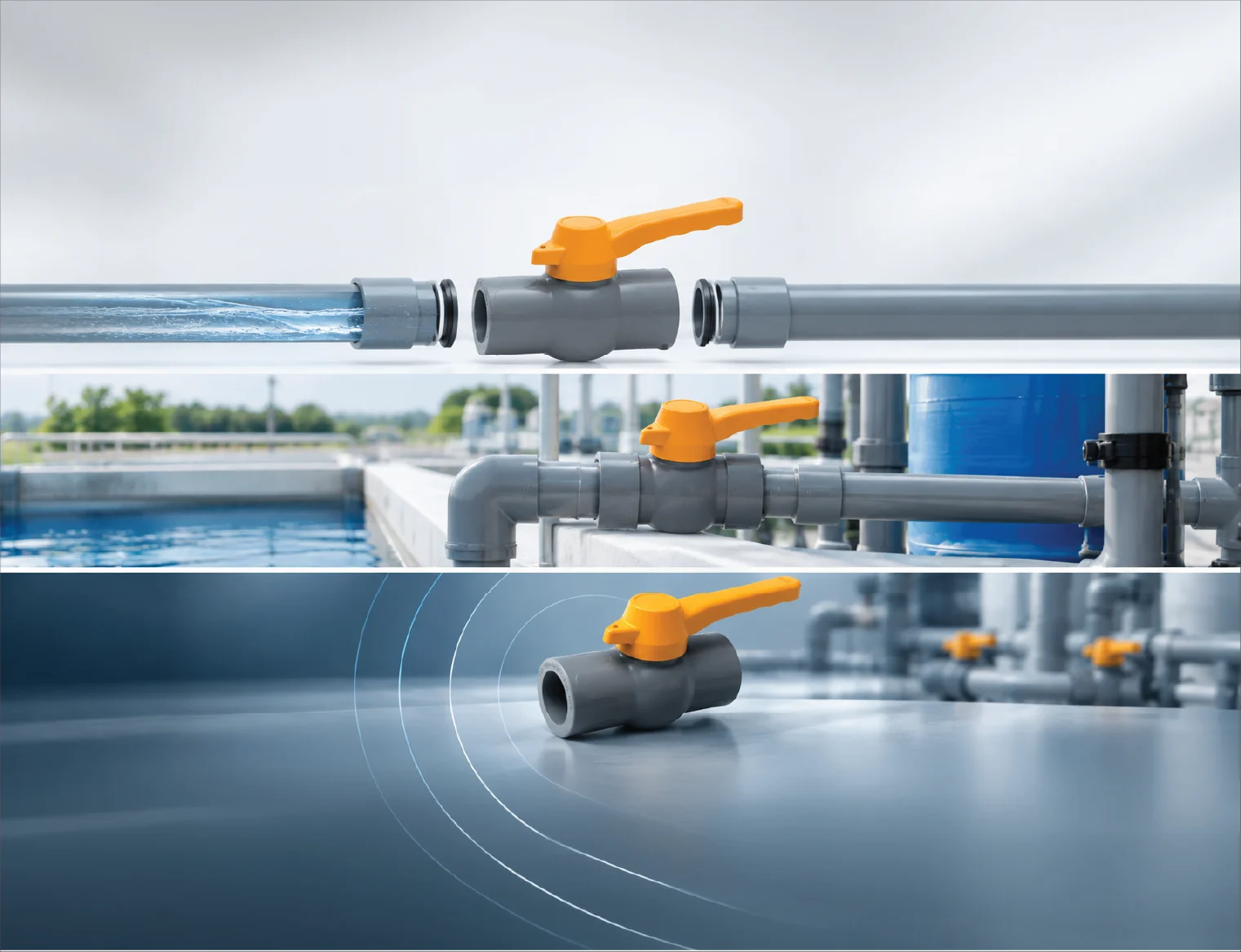
In plumbing systems, a valve may perform a simple function, but the space available for installing it is not always generous. Compact ball valves are for applications where shut-off control is needed without taking up as much physical space.
A compact ball valve in uPVC combines the space saving design with the material properties of the uPVC making it suitable for a range of water and fluid handling applications. Understanding how the valve works, what makes its design compact and where it is commonly used helps determine where it fits within a plumbing system.
Why use a compact valve?
There are plenty of plumbing installations where space simply isn't generous. There may be pipes, fittings and other components already in the area, leaving very little room for a valve.
The compact design gives the valve a low profile, making it easier to fit in such locations. An UPVC ball valve can therefore be considered when the installation needs a manually operated valve without a bulky profile.
What is a uPVC compact ball valve?
A uPVC compact ball valve is a manually operated valve made from Unplasticized Polyvinyl Chloride or uPVC. Its construction is designed around a compact, space-saving profile.
The valves are precision moulded using virgin, high-quality uPVC. They are also designed for smooth operation, while the UV-stabilised and corrosion-resistant construction makes them suitable for applications where the valve may be exposed to sunlight or corrosive surroundings.
What makes the design compact?
The basic idea is quite straightforward. The valve has a streamlined profile, so it does not need as much physical space as a bulkier design.
When looking at compact ball valve specifications, it is worth checking more than just the overall size. The material, sealing arrangement and type of connection all form part of the valve and how it fits into the surrounding plumbing.
Where can it be used?
The applications are fairly varied. These valves are suitable for residential and commercial cold-water plumbing systems, water tanks and overhead tank inlet and outlet connections.
They can also be used with RO plants, water filtration units, garden taps and landscape irrigation. In a farming state such as Uttar Pradesh, where irrigation is an important part of agricultural activity, even a small plumbing component needs to fit neatly into the wider system.
Why is uPVC used for the construction?
The valves are precision moulded from virgin, high-quality uPVC and are designed for long-term performance. Their construction is UV stabilised and corrosion resistant as well.
That makes the material particularly relevant for installations where the valve may encounter harsh sunlight or corrosive environments. If you come across a uPVC ball valve brass option while comparing valves, remember that the two use different construction materials. The choice should come down to the requirements of the particular installation.
What about the sealing?
A valve needs to seal properly once it is connected to the plumbing. These compact valves are 100% hydro tested and use advanced engineered TPE seals for leak-free sealing.
The TPE seals form part of the valve's construction and work alongside the body and connection arrangement. It is a small detail, but one that becomes important when the valve is being used as part of a water system.
How does it connect?
The valves are available with solvent-glued socket ends that are compatible with ASTM standards. If the valve is being used with uPVC pipe fittings, the connection arrangement should be checked beforehand to make sure the components are compatible.
This is something to check before choosing an UPVC ball valve for an existing plumbing arrangement. The valve and pipework need to have compatible connection types, so the compact size alone shouldn't be the deciding factor.
Can it be used for water supply?
Yes. The listed applications include residential and commercial cold-water plumbing, as well as water tanks and overhead tank inlet and outlet connections.
A PVC ball valve for water supply can also be relevant in setups where the valve has to fit into a relatively confined section of pipework. The compact profile gives the installer another option when space around the connection is limited.
What about RO and filtration units?
RO plants and water filtration units are also among the listed applications for these valves. These kinds of installations can contain several pipes and components in a relatively small area.
In that situation, a compact valve can be easier to accommodate without changing the basic function it is there to perform. The uPVC construction, TPE sealing and solvent-glued socket ends remain part of the same design.
Can it be used in irrigation?
It can be used for landscape irrigation and garden taps. A ball valve for irrigation piping can provide manual shut-off where it is needed within such an arrangement.
The compact profile is useful when there isn't much free space around the pipework. The valve still needs to suit the system, as these valves are intended for the water-handling applications listed above.
What should you look at before installation?
Before ball valve installation, take a look at the space available around the pipework as well as the connection points. A valve may fit the available area but still need the correct connection arrangement for the surrounding pipes.
It is also worth checking the intended use. These valves are designed for cold-water plumbing, water tanks, RO plants, water filtration units, garden taps and landscape irrigation.
How does Automat approach these valves?
At Automat, we offer this compact valve range for installations where space is restricted but a durable, easy-to-operate valve is still needed. The valves are made using virgin high-quality uPVC, with engineered TPE seals and solvent-glued socket ends. Each valve is 100% hydro tested.
The UPVC ball valve range is UV stabilised and corrosion resistant, with applications covering residential and commercial cold-water plumbing, water tanks, RO plants, water filtration units, garden taps and landscape irrigation.
Conclusion
A ball valve doesn't need to be complicated. In many installations, the bigger question is whether it can fit comfortably into the space available while providing the required shut-off function.
A uPVC compact ball valve brings together a space-saving profile, uPVC construction, smooth operation, leak-free sealing and solvent-glued socket connections. Its listed applications range from cold-water plumbing and water tanks to RO plants, filtration units, garden taps and landscape irrigation.
At Automat, we look at these smaller components as part of the larger water-management system. When the available space is tight, getting the size, material, sealing and connection right can make the plumbing arrangement much easier to work with.
FAQs
What is a uPVC ball valve?
Think of it as a simple way to stop or allow water flow manually. This one is made from uPVC and has a compact, space-saving design.
Where are uPVC ball valves commonly used?
They are used in places like cold-water plumbing, water tanks, RO plants, filtration units, garden taps and landscape irrigation.
Are uPVC ball valves suitable for outdoor plumbing?
They can. The construction is UV stabilized and corrosion resistant so it can take the sunlight and the corrosive environments.
What are the advantages of uPVC over metal ball valves?
The uPVC construction keeps the valve compact and durable, while also giving it smooth operation and resistance to sunlight and corrosion.
How long does a uPVC ball valve typically last?
They are designed for long term use but there is no set life given for these valves.

Download Mobile App


Get in touch

Plot no. 18-19, Dilshad Garden, G.T. Road, New Delhi 110095.


