
Popular Searches
Popular Searches

Why the Right Valve for Drip Irrigation Makes a Bigger Difference Than Most People Think
One of the advantages of drip irrigation is precision.
But precision only works when water can be directed exactly where it needs to go. Whether it is opening a zone, shutting down a section for maintenance, or controlling flow across the field, valves quietly handle much of that work behind the scenes.
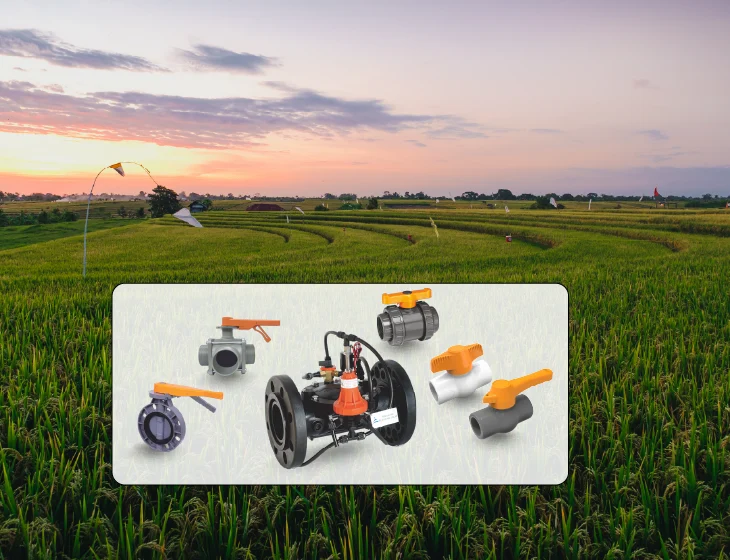
One of the advantages of drip irrigation is precision.
But precision only works when water can be directed exactly where it needs to go. Whether it is opening a zone, shutting down a section for maintenance, or controlling flow across the field, valves quietly handle much of that work behind the scenes.
Most growers spend a lot of time thinking about emitters, filtration, and water supply. Valves usually attract attention only when something needs to be adjusted. Yet they are often the reason an irrigation system feels easy to manage in one field and frustrating in another.
A valve for drip irrigation helps keep the system manageable
A valve's job sounds simple enough. Open it, close it, and let water pass through.
In practice, it does much more than that. A valve for drip irrigation allows different sections of the field to be controlled independently, making it easier to manage irrigation according to actual crop requirements. Without that control, even a well-designed layout can become difficult to operate efficiently.
The difference usually becomes obvious during the season. Systems with good control tend to require fewer workarounds and fewer last-minute adjustments.
Not every part of the farm behaves the same way
Anyone managing multiple crops or even different sections of the same crop knows this already.
One area may dry out faster than another. A younger planting may need a different irrigation schedule than a more established section. Trying to treat every zone exactly the same rarely works for very long.
That is where a drip irrigation valve becomes useful. Instead of forcing the entire field onto one schedule, growers can manage sections according to what is actually happening on the ground. Over time, that flexibility often becomes one of the most valuable parts of the system.
Maintenance is easier when sections can be isolated
Filters need cleaning. Laterals may need flushing. A fitting somewhere in the field decides it no longer wants to cooperate. When that happens, the ability to isolate one section can save a lot of unnecessary disruption.
Anyone who has had to stop irrigation across an entire field just to deal with a small issue quickly learns why valves matter. A properly placed valve for drip irrigation allows maintenance to happen where it is needed without affecting everything else.
That may sound like a small advantage, but during a busy irrigation season it can save a surprising amount of time.
An irrigation control valve supports steady operation
Water does not move through an irrigation network under identical conditions all the time. Pipe length, field layout, elevation changes, and operating zones can all influence how water behaves. Managing those variations often requires more than simply opening a line and hoping everything balances itself.
An Irrigation control valve helps manage discharge and pressure throughout the system. The reference material describes control valves as an important part of regulating water movement within irrigation networks.
When flow remains more stable, the rest of the system generally becomes easier to predict and easier to manage.
Air causes more trouble than most people realise
Most people think irrigation systems deal only with water. Air moves through the network as well, particularly during startup, shutdown, and pressure fluctuations. If it is not managed properly, it can create issues that affect performance elsewhere in the system.
An Air release valve helps prevent those problems by allowing air to enter or leave the system when required. The reference material highlights vacuum relief and air release devices that help protect pipelines from excessive vacuum conditions and pressure-related damage.
These are not the components farmers talk about every day, but they often help prevent bigger issues later.
A drip system valve adds flexibility during the season
The irrigation schedule you start the season with is rarely the one you finish with. Weather changes. Crop demand changes. Some areas of the field always seem to need a little extra attention compared to others.
A Drip system valve makes it easier to respond to those changes without redesigning the entire irrigation plan. Individual zones can be operated separately, adjusted when necessary, or temporarily isolated for maintenance.
That flexibility becomes increasingly useful as irrigation systems grow larger and more detailed.
Valves work alongside other micro irrigation components
No irrigation system depends on a single component. Water reaches the crop properly only when everything in the network is working together, and valves are an important part of that process.
When these components work together properly, growers spend less time troubleshooting and more time focusing on the crop itself. Good irrigation is rarely about one component doing everything. It is usually about many components working together as intended.
The difference usually shows up after a few seasons
Most growers do not spend much time thinking about valves once the system is installed. What they notice is whether irrigation remains easy to manage year after year. Some systems seem to need constant intervention. Others simply settle into a routine and keep doing their job.
At Automat , we see valves as an important part of long-term irrigation performance. Features such as durable construction, reliable operation, easy maintenance, and resistance to challenging field conditions all contribute to smoother day-to-day irrigation management.
A dependable valve for drip irrigation often influences the overall experience of running the system far more than people expect when the installation first goes in.
Conclusion
Most growers do not walk through the field thinking about valves. What they notice is whether water reaches the right place, whether zones operate when they should, and whether maintenance feels straightforward instead of frustrating.
A properly selected valve for drip irrigation helps make all of those things easier. It supports better control, more flexible operation, and a system that can adapt as field conditions change throughout the season.
The valve may not be the most visible part of the irrigation network, but it is often one of the reasons the entire system feels easier to live with year after year.
FAQs
What are the different types of drip irrigation valves used in India?
It varies from one setup to another. On most farms, you'll usually find different types of valves being used for different parts of the irrigation system.
Which valve is best for drip irrigation systems?
Usually the one that suits the drip irrigation systems properly. What works well in one field's drip irrigation systems may not be the best fit for another setup.
Can automatic valves reduce labor costs?
They certainly can help. Less time spent opening and closing valves manually usually means less day-to-day effort.
What size valve should I choose for my drip system?
It's best matched to the pipe size and flow requirements of the system rather than choosing a standard size.
How do pressure regulating valves improve crop performance?
When pressure stays under control, irrigation tends to be a lot more predictable across the field.

Download Mobile App


Get in touch

Plot no. 18-19, Dilshad Garden, G.T. Road, New Delhi 110095.


