
Popular Searches
Popular Searches

Complete Guide to Rain Gun Irrigation Systems for Modern Agriculture Irrigation
Choosing the right rain gun irrigation system can save water, reduce labor, and improve crop growth. This guide covers everything from selecting the best rain gun for tall crops to understanding pressure, nozzle size, coverage, and maintenance for reliable irrigation throughout the growing season.
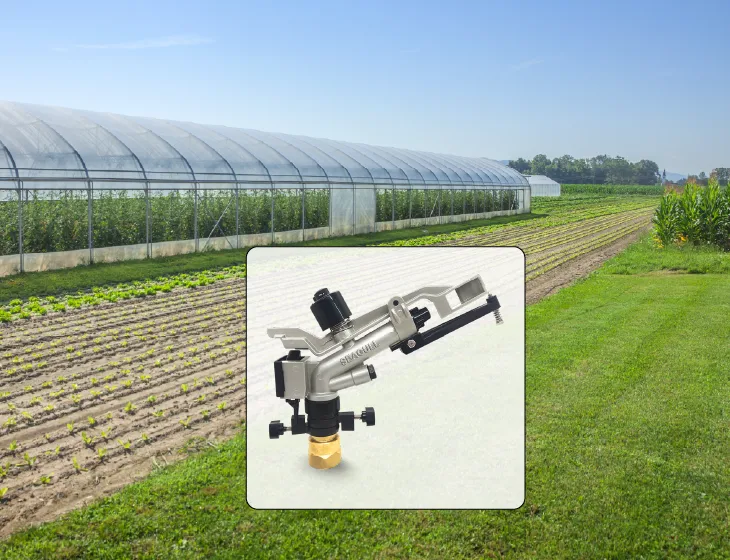
Water is the single biggest variable standing between a good harvest and a great one. For farmers growing tall, overhead crops such as sugarcane, maize, banana, and orchard plantations, a rain gun irrigation system has become one of the most practical ways to deliver uniform water coverage over a full-height canopy without the labour and channel losses that come with flood irrigation. This guide breaks down how these systems work, which type suits large-height crops best, and answers the questions farmers ask most often before buying one.
What Is a Rain Gun Irrigation System?
A rain gun irrigation system is a high-flow sprinkler that throws water in a wide circular or part-circular pattern, mimicking natural rainfall over large areas. Unlike drip or micro sprinklers, a rain gun irrigation system is built for open-field, high-volume watering - sugarcane, maize, banana, cotton, and orchard or plantation crops are among the most common applications, especially where the crop canopy grows well above ground level. The system typically connects to a pump set through HDPE or PVC piping, with the gun mounted on a tall riser or a mobile trolley that can be repositioned across the field.
Best Type of Rain Gun for Overhead Irrigation on Tall, Large-Height Crops
Tall crops like sugarcane, maize, banana, and orchard plantations have two specific demands: enough throw height to clear a dense, rising canopy, and even coverage that still reaches the root zone once the crop is fully grown. Not every rain gun on the market is suited to this.
High-trajectory, full-circle rotating rain guns mounted on tall risers, with brass or gunmetal nozzles, are generally the best fit for overhead irrigation on large-height crops. Here's why:
- Operating Pressure: Tall-canopy crops need guns rated for 4–6 kg/cm² pressure. This higher range gives the throw enough height and force to clear the crop canopy and still deliver a good throw radius (30–45 metres) to the base of the plants.
- Trajectory Angle: A higher-angle trajectory (24°–27°, versus the 20°–22° used for low crops) sends water further up and over the canopy before it arcs down, which is essential once sugarcane or maize reaches full height.
- Riser Height: Guns for overhead irrigation on tall crops are typically mounted on 1.5–2.5 metre risers or elevated stands, so the nozzle sits above the canopy rather than firing Nozzle configuration: A single, large-bore nozzle handles the higher flow and pressure that overhead irrigation on tall crops needs, and resists clogging from silty canal or borewell water.
- Rotation Mechanism: Gear-drive rotation is generally preferred for tall-crop installations, since it runs quieter and needs less maintenance over a long growing season under sustained higher pressure than impact-drive units.
For most large-height crop plantations, a mid-to-high-range rain gun delivering 20,000–30,000 litres per hour strikes the right balance between throw height, coverage speed, and water-use efficiency.
- Through it, which would otherwise block the spray pattern and cause uneven wetting.
How a Rain Gun Irrigation System Works ?
The setup doesn't involve anything complicated. A pump sends water from a canal, borewell, or storage tank, through the pipeline, to the rain gun. Once it comes out of the nozzle at high speed, the gun starts rotating, spreading water in a circular pattern. The stream breaks into droplets that fall much like rain. Every 1.5 to 2 hours, the unit is moved to the next position so the spray overlaps with the previous one and the field gets covered evenly.
Because a rain gun irrigation system needs far less trenching and levelling than flood irrigation, it's increasingly the preferred choice for farmers moving away from water-intensive traditional methods, especially in regions facing groundwater stress.
Faq's
What nozzle size is best for rain gun irrigation?
Nozzle sizes generally range from 12mm to 24mm. If you're irrigating taller crops like sugarcane or maize, a 20mm to 24mm nozzle is usually where people start because it can throw water over the top of the crop. Lower-growing row crops don't need that much reach, so a 12mm to 16mm nozzle is often used instead.
How many acres can one rain gun system cover?
A single medium-capacity rain gun can typically irrigate 1 to 1.5 acres per setting, with a throw radius of 25–40 metres. Over a full day of repositioning (6–8 shifts), one unit can realistically cover 6–10 acres, depending on pump capacity and field layout. Larger farms often run two to three guns in parallel off a common pipeline to cut total irrigation time.
Which rain gun model is best?
The right model depends on crop height, farm size, water source, and pressure availability. As a general rule: brass-nozzle, gear-drive rain guns rated for 4–6 kg/cm² pressure, a 24°–27° trajectory angle, and 20,000–30,000 LPH flow are the most reliable and low-maintenance choice for sugarcane, maize, banana, and other tall, large-height crops. Farmers with limited pump capacity should choose a smaller-nozzle model rather than under-pressurizing a large one, since under-pressurized guns can't clear a full canopy and throw water unevenly.
How does wind affect rain gun irrigation?
Wind is the biggest variable in rain gun performance. Speeds above 10–12 km/h can push the spray pattern off-centre, leaving one side of the coverage circle under-watered and causing drift losses at the edges. In windy conditions, lowering operating pressure slightly - to produce larger droplets that resist drift - or scheduling irrigation for early morning and evening hours, when wind is typically calmest, helps maintain even coverage.
Can rain guns work on sloped plantation farms?
Yes, but a few changes are usually needed. On sloping land, water tends to run downhill before it has enough time to soak into the soil. That is why the rain gun is usually moved a little sooner, with more overlap between each position to help prevent water from collecting at the bottom of the slope. Lower-pressure, larger-droplet guns are generally better suited to slopes than high-pressure fine-mist models, since large droplets infiltrate faster before they can run off. Plantation crops like coffee, tea, and orchards commonly use this approach successfully.
How do farmers use rain guns with borewell water?
Borewell water is a common source for rain gun irrigation systems, especially in areas without canal access. Since borewell water can carry sand or silt, farmers typically install a filter - a disc or screen filter - between the pump and the gun to prevent nozzle clogging. Borewell-fed systems also need a pump correctly sized to the gun's flow and pressure requirements, since inconsistent borewell yield can otherwise cause pressure drops mid-cycle and uneven watering.
Choosing the Right System for Your Farm
A well-matched rain gun irrigation system pays for itself through labor savings and more consistent yields, but the right setup depends on field size, water source, terrain, and local wind conditions. Farmers evaluating options should size the pump first, match the nozzle and pressure rating to their crop, and prioritize durable, low-maintenance components, since a rain gun typically runs for years across multiple cropping seasons.

Download Mobile App


Get in touch

Plot no. 18-19, Dilshad Garden, G.T. Road, New Delhi 110095.


