
Popular Searches
Popular Searches

How Brass Sprinklers Improve Uniform Water Distribution ?
When water distribution becomes uneven, the first instinct is often to run the system a little longer.
The problem is that doing so may help one part of the field while creating excess irrigation somewhere else.
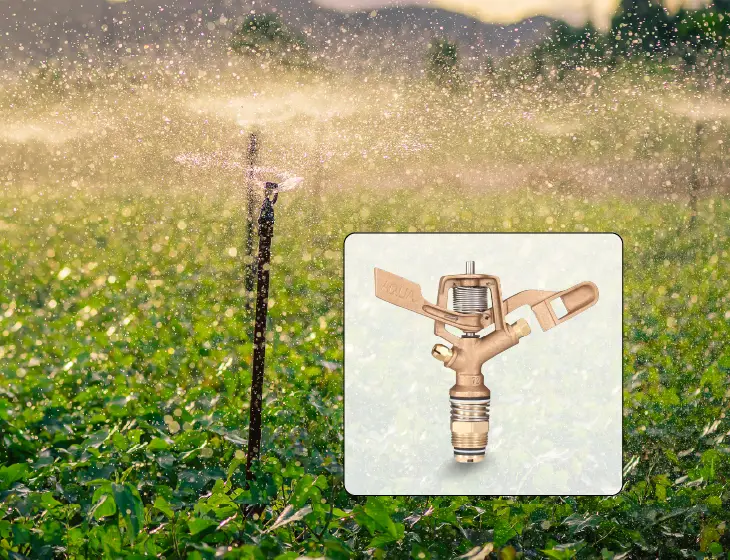
When water distribution becomes uneven, the first instinct is often to run the system a little longer.
The problem is that doing so may help one part of the field while creating excess irrigation somewhere else. A few extra minutes of watering can solve one issue and quietly create another. That is why uniform distribution remains one of the foundations of efficient sprinkler irrigation.
Most farmers have seen this happen at some point. One area of the field looks perfectly fine after irrigation, while another appears a little drier. The immediate assumption is usually that more water is needed. In reality, the issue is often how the water is being spread rather than how much is being applied.
Uniform coverage is what growers notice
Farmers rarely walk through a field carrying measuring equipment.
What they notice is whether the crop looks even. If one section grows differently from another despite receiving water from the same system, something is usually affecting distribution. Uneven irrigation can gradually create differences across the field, particularly when the same pattern continues throughout the season.
This is why a well-designed sprinkler irrigation system focuses so heavily on coverage. The aim is to ensure that water reaches as much of the irrigated area as possible in a consistent manner.
A brass sprinkler earns its place over time
Most irrigation equipment looks good when it is new.
The real test comes after months of operation in changing weather conditions, exposure to water, and regular movement in the field. This is often where material quality starts to matter.
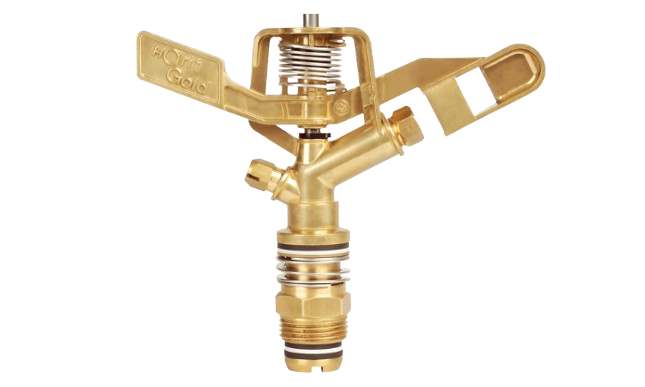
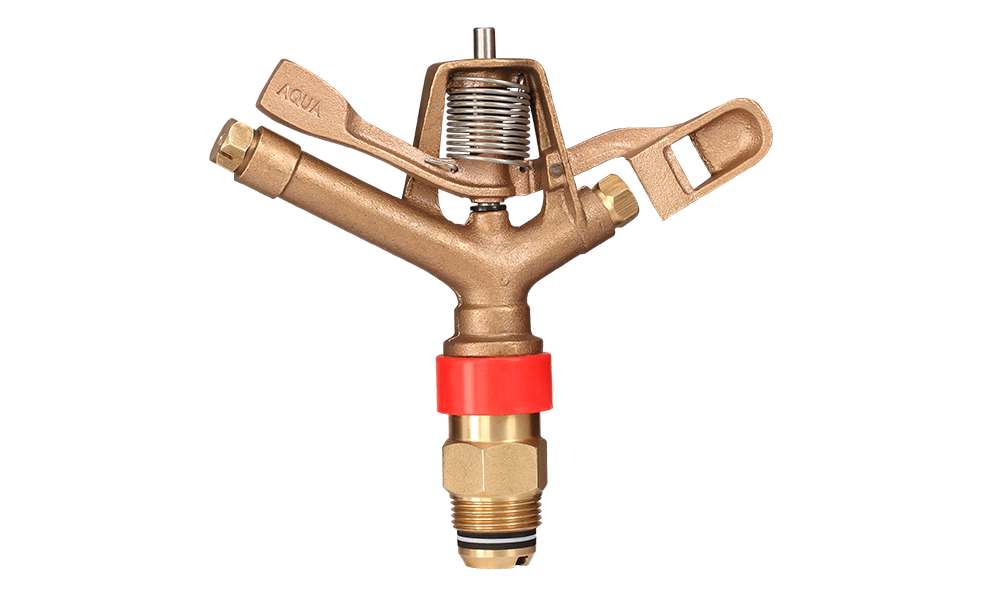
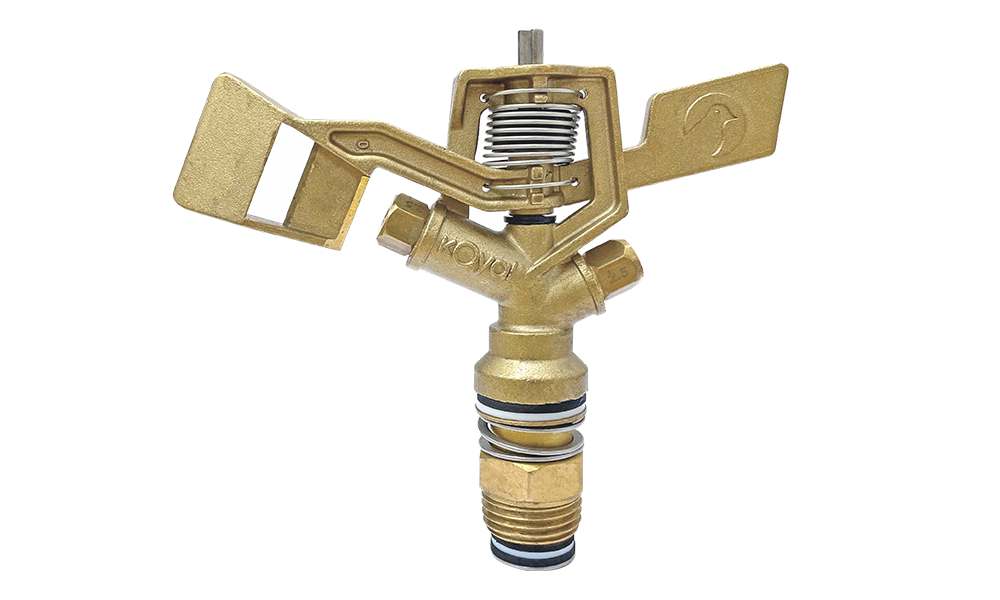
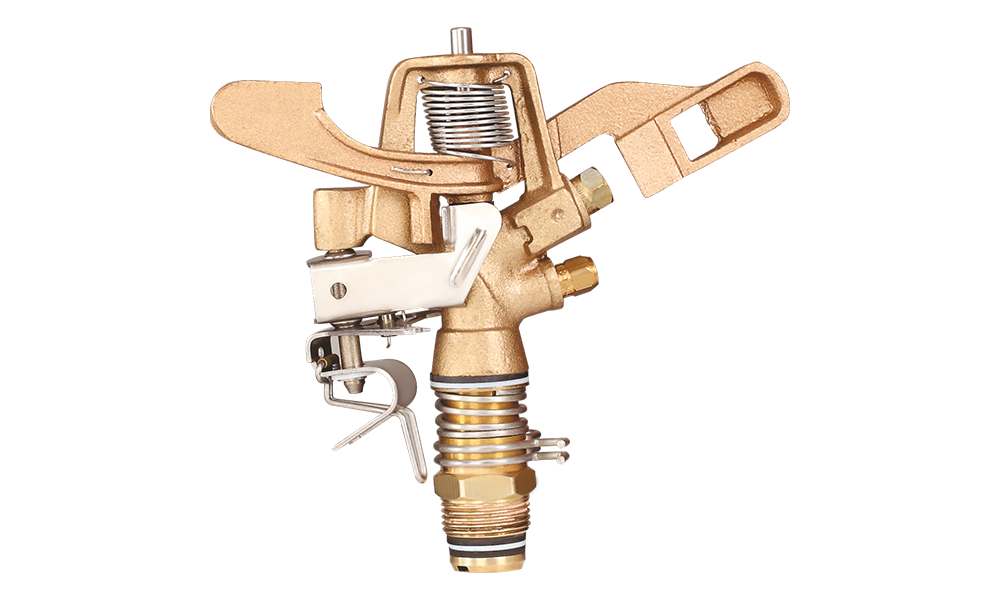
A brass sprinkler is commonly used because it is built for long-term agricultural use. When components continue performing the way they should, the sprinkler is more likely to maintain its original spray characteristics season after season. That reliability is one reason brass models continue to be widely used in agriculture.
Rotation affects water distribution more than people realise
A sprinkler's job is not simply to release water.
It also needs to rotate properly. That movement helps spread water across the intended coverage area and allows neighbouring sprinklers to overlap correctly. When rotation becomes inconsistent, the effects usually show up somewhere in the field.
A Brass impact sprinkler is designed around this principle. The reference material highlights durable brass construction, stainless steel pivot pins, and designs intended to maintain smooth operation. When rotation remains steady, coverage tends to remain more predictable as well.
Pressure plays a bigger role than many expect
Two identical sprinklers can behave very differently if operating conditions change.
One may throw water exactly where it should, while another may struggle to reach the same distance. Often, the difference comes back to pressure.
Good Water pressure management helps sprinklers operate within their recommended range. When pressure stays reasonably steady, the sprinkler usually behaves the way you expect it to. The coverage remains more predictable from one irrigation cycle to the next. Without proper pressure conditions, even high-quality equipment may struggle to perform consistently.
A brass sprinkler works best as part of a complete system
It is easy to blame a sprinkler when coverage does not look right.
Quite often, the sprinkler is only part of the story. A filter may need cleaning. Pressure may have changed somewhere in the line. A fitting could be restricting flow. Sometimes the actual cause starts much further back in the system.
A brass sprinkler performs best when the rest of the irrigation network is working properly too. Uniform distribution usually comes from several components working together rather than from one piece of equipment doing all the work.
Small differences become bigger over time
One irrigation cycle rarely tells the whole story.
The real impact appears after the same conditions repeat week after week. A slightly dry patch may become more noticeable. A wetter section may start behaving differently from the rest of the field.
That is why growers often pay attention to coverage long before obvious irrigation problems appear. Small inconsistencies have a habit of becoming much easier to spot as the season progresses.
An irrigation sprinkler should not demand constant attention
Most growers already have enough to think about during the season.
They are managing crops, labour, weather conditions, and countless daily decisions. Nobody wants irrigation equipment that constantly requires checking or adjustment.
A dependable Irrigation sprinkler allows growers to focus more attention on the crop itself. When equipment performs reliably, irrigation simply becomes one less thing to worry about.
Crop irrigation is about consistency
Good irrigation is rarely about a single watering event.
What matters is what happens over an entire season. Crops respond to repeated conditions, whether those conditions are good or bad. Consistent irrigation helps create a more stable growing environment throughout the field.
Effective Crop irrigation depends heavily on maintaining that consistency. The more uniform the water application, the easier it becomes to manage moisture levels across the entire growing area.
Farm irrigation equipment is only as good as its performance in the field
Brochures and specifications tell part of the story.
The field tells the rest.
Farmers tend to judge equipment based on how it performs after months of use rather than how it looks on paper. Reliability, durability, and consistent operation usually matter far more than marketing claims.
Good Farm irrigation equipment earns trust gradually. It does its job season after season without creating unnecessary problems for the grower.
Why brass continues to remain relevant ?
Agricultural irrigation has changed considerably over the years.
New technologies, improved designs, and better manufacturing methods have all influenced how irrigation systems are built. Yet brass continues to remain a popular material for many sprinkler applications.
A brass sprinkler offers a combination of durability, stable performance, and long service life that many growers value. The reference material highlights brass-based impact sprinkler models designed for a wide range of agricultural applications, including vegetables, cereals, row crops, tea, coffee, and other field crops.
How we approach sprinkler design ?
At Automat, we spend a great deal of time thinking about what happens after installation.
The focus is not simply on getting water out of the sprinkler. The focus is on helping growers achieve dependable coverage throughout the season. Features such as durable materials, reliable rotation, and operation under recommended pressure conditions all contribute to that objective.
Because irrigation efficiency ultimately comes back to one simple question: is water reaching the crop as evenly as possible?
Conclusion
When irrigation becomes uneven, adding more water is not always the answer.
Most growers do not spend much time thinking about sprinklers once the season is underway. What they notice is whether water is reaching the field evenly and whether irrigation feels easy to manage from one cycle to the next.
A well-designed brass sprinkler helps create that consistency. At Automat, we continue to focus on practical irrigation solutions that support reliable water distribution and help farmers make better use of every irrigation cycle.
FAQs
Can brass sprinklers work with low water pressure?
Yes. A lot depends on the sprinkler model, but many brass sprinklers continue to work well even when pressure is on the lower side.
Which crops benefit most from brass sprinkler irrigation?
You'll find them being used in everything from vegetables and cereals to sugarcane, tea, and coffee fields.
Do brass sprinklers improve water-use efficiency?
They can make a noticeable difference when some parts of the field tend to receive more water than others.
Why are brass sprinklers preferred in agriculture?
Ask farmers why they use brass sprinklers and many will give a fairly simple answer: they've worked well for them over the years.
How do brass sprinklers improve water distribution?
By keeping the spray pattern consistent. When water is spread more evenly, the field tends to respond more evenly as well.

Download Mobile App


Get in touch

Plot no. 18-19, Dilshad Garden, G.T. Road, New Delhi 110095.


