
Popular Searches
Popular Searches

Why are Industrial Filtration Systems Important for Sustainable Water Treatment ?
If you've ever seen an irrigation system lose pressure for no obvious reason or watched a pump require servicing far sooner than expected, there's a good chance the problem didn't begin with the equipment itself. More often than not, it started with the water.
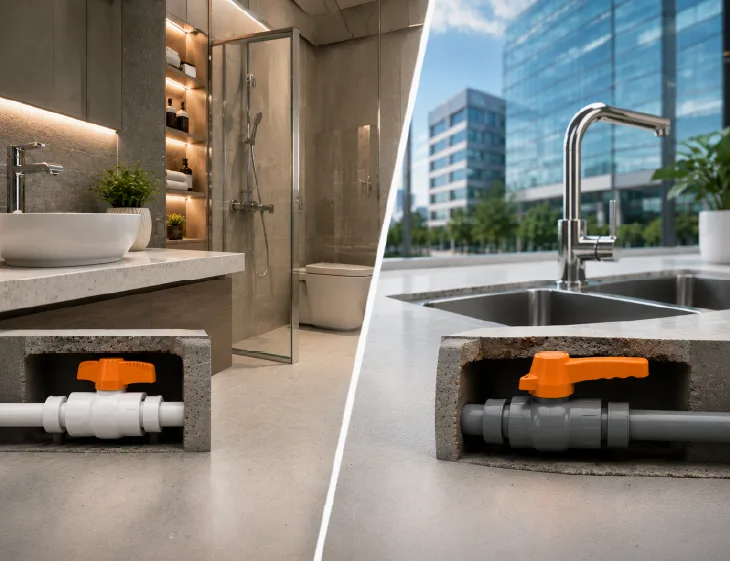
If you've ever seen an irrigation system lose pressure for no obvious reason or watched a pump require servicing far sooner than expected, there's a good chance the problem didn't begin with the equipment itself. More often than not, it started with the water.
Water drawn from borewells, rivers, ponds or reservoirs almost always carries something with it. Sometimes it's fine sand that slowly wears away moving parts. In other cases, it's silt, algae or organic matter that settles inside pipelines and blocks sprinklers, valves or emitters. These particles are small enough to travel unnoticed through the system, but over time they create problems that are expensive to fix.
That's one of the reasons industrial filtration systems have become such an important part of sustainable water treatment. Good filtration isn't only about making water cleaner. It's about keeping everything that depends on that water working efficiently for much longer.
Cleaner water usually means fewer problems later
People often blame pumps or valves when performance starts dropping. In reality, those components are usually dealing with water that has been carrying unwanted particles for weeks or even months. By the time reduced flow or clogging becomes noticeable, sand and suspended matter have already travelled through much of the system.
Removing those particles near the beginning changes what happens further down the line. Pumps experience less wear, pipelines stay cleaner and irrigation equipment continues delivering water more evenly. It also means maintenance teams spend less time clearing blockages that could have been prevented in the first place.
Different industrial filters types exist because water is never the same everywhere
Anyone who has worked with different water sources knows that no two behave exactly alike. A borewell may produce clean-looking water that still contains abrasive sand. Surface water collected from ponds or canals can carry algae, leaves and fine organic material, while river water often changes with the seasons.
That's why there are different industrial filters types instead of one filter that's expected to handle every situation. Hydrocyclone filters are commonly used where sand removal is the priority because they separate heavier particles using centrifugal force. Sand media filters are better suited for surface water containing suspended organic matter, while screen and disc filters remove finer particles before the water reaches sprinklers, drip systems or other downstream equipment. Depending on the application, these filters may be manual, semi-automatic or fully automatic.
Sustainable water treatment is about more than saving water
When sustainability comes up, most people immediately think about reducing water consumption. That's certainly important, but using water responsibly also means avoiding the waste that comes from poorly performing systems. A blocked filter, worn-out pump or clogged sprinkler rarely happens overnight. They are usually the result of contaminants moving through the network day after day.
This is one reason modern filtration systems have become much easier to maintain than older designs. Many now clean themselves through automatic flushing, while others continue filtering even during the cleaning process. Some designs also reduce the number of moving parts, helping lower routine servicing requirements and making them better suited for continuous operation.
Why industrial filter manufacturers continue improving filtration technology ?
The purpose of filtration hasn't really changed over the years. Water still needs to be cleaned before it reaches equipment that depends on it. What has changed is what users expect from the filtration system itself.
Today's industrial filter manufacturers are not only trying to improve filtration efficiency. Nobody wants a filter that needs frequent cleaning or starts showing signs of wear after a short time. That is one reason newer filtration systems are built with corrosion-resistant materials and features that make routine maintenance much less of a chore. Engineering polymers, stainless steel components and automatic cleaning mechanisms have become common because they help filtration systems continue performing reliably in demanding environments with less maintenance.
What people expect from filtration systems today ?
The industrial filter market has changed because the way people manage water has changed. Simply removing dirt from water is no longer enough. Users want filtration systems that are dependable, easy to maintain and capable of running for long periods without constant attention. Whether the application is agricultural, industrial or municipal, stopping operations every time a filter needs cleaning is rarely practical.
That is why many modern filtration systems are designed with automatic flushing and self-cleaning mechanisms that reduce manual intervention. Corrosion-resistant polymeric materials and stainless steel components have also become common because they stand up well to demanding operating conditions while requiring less maintenance over their service life.
How industrial filtration manufacturers are responding ?
Every water source brings its own challenges, so relying on a single filtration method rarely works well. Industrial filtration manufacturers have gradually expanded their product range to suit different water conditions instead of expecting one design to handle every application.
For example, hydrocyclone separators are widely used where sand removal is the main requirement, while sand media filters are suited to water containing suspended organic matter. Screen filters and disc filters provide finer filtration before water reaches sprinklers, drip irrigation systems or industrial equipment. Offering different filtration technologies allows the system to be matched to the source of water instead of forcing the water to suit the filter.
Compare industrial water filter manufacturers in India by looking beyond the brochure
When businesses compare industrial water filter manufacturers in India, technical specifications are often the first thing they look at. While specifications are important, they do not always reflect how well a filtration system will perform once it has been installed and is operating every day.
It is equally important to understand the quality of the available water, the type of contaminants that need to be removed and how much maintenance the system is likely to require over time. A filtration system that matches the application usually delivers better long-term performance than one chosen only because of its initial price or specification sheet.
What sets top industrial filter manufacturers apart?
People usually don't judge a filter on the day it's installed. They judge it months later, when it's time for cleaning or servicing. If the job takes longer than expected or the system needs constant attention, that's when the differences between products start becoming obvious.
That's one reason the top industrial filter manufacturers keep refining their designs. Features like corrosion-resistant construction and automatic cleaning aren't just additions on a specification sheet. They make the equipment easier to live with over years of regular use.
Filtration solutions designed for different applications
Automat offers a range of filtration systems that can be selected according to the source and quality of water rather than relying on a single approach. The range includes hydrocyclone separators, sand media filters, screen filters and disc filters, along with manual, semi-automatic and fully automatic options for agricultural, industrial, landscaping and municipal applications. Many of them use corrosion-resistant polymeric bodies because they don't rust easily and are well suited for environments where the equipment stays outdoors for years.
Choosing the right filter depends less on buying the "best" product and more on understanding the water you're working with. A filter that performs well with borewell water may not be the right choice for water drawn from a pond or canal.
Conclusion
Most water management problems do not begin with a failed pump or a blocked valve. They begin much earlier, when unwanted particles are allowed to move through the system unchecked. Removing those particles before they reach critical equipment helps improve reliability, reduce maintenance and make better use of available water over the long term.
As water management continues to evolve, industrial filter manufacturers are developing filtration systems that are easier to maintain, more durable and better suited to different operating conditions. For organisations looking to build dependable water infrastructure, effective filtration remains one of the simplest and most practical investments they can make, and Automat continues to offer solutions designed around those everyday challenges.
FAQs
What is an industrial filtration system?
An industrial filtration system removes sand, silt, organic matter and other unwanted particles from water before it reaches equipment. It helps keep pipelines, pumps and other components working more efficiently.
Which industries use industrial filtration systems?
Almost any industry that depends on a steady supply of clean water can benefit from industrial filtration systems. They're commonly used in agriculture, manufacturing, landscaping, municipal water projects and several industrial processes.
How do industrial filtration systems support sustainability?
A lot of it comes down to avoiding unnecessary waste. When cleaner water moves through the system, equipment tends to stay cleaner too, which means fewer repairs and less water lost because of blockages or poor performance.
What is the difference between filtration and water treatment?
If the goal is simply to remove sand or silt, filtration may be enough. Water treatment usually goes a step further and can include other processes based on where the water is headed next.
How often should industrial filters be maintained?
There's no single answer because every water source is different. If the water carries a lot of sand or debris, the filter will naturally need attention more often than one handling relatively clean water.
Download Mobile App


Get in touch

Plot no. 18-19, Dilshad Garden, G.T. Road, New Delhi 110095.


